Meritong. EN / DE Free intro call

Solutions

The BOM audit in detail

Every line of your bill of materials gets a figure. Saving, second source, switching effort. This page sets out how the audit runs, what the report contains and what it costs.

Example
Meritong · assessment per itemSeverity score
MCU · STM32H7xxperipheral mapping wired into firmware
Switching cost40%95
Single-source risk30%92
Concentration20%82
Regulation10%62
Severity score88high
Rank in report1of 119 items
Replacement cost€12–18kestimated
Sample · one item out of 119Report, page 4
up to70% Cost saving

through direct purchase from the manufacturer instead of through Western distributors

up to80% Lead-time reduction

through alternative sourcing where the first source quotes 52 weeks

markedly lower dependency

through qualified second and third sources for every critical item

Upper figures from completed and ongoing engagements. The free potential check gives you an order of magnitude for your case.

01 / The report

What does the report contain?

The report shows savings, dependencies and alternative suppliers

  1. 01

    The dependency table

    Every component, every supplier and every code path that creates a dependency, with a severity rating across four dimensions.

  2. 02

    The cost estimate per replacement

    For every high-severity dependency, the engineering hours and the budget a replacement costs.

  3. 03

    The substitution map

    Qualified alternative suppliers and components, with the technical effort a switch requires.

02 / The method

How does the analysis actually run?

A detailed BOM audit reveals cost savings and dependencies

Every engagement follows the same structured sequence. Your audit uses the steps that apply to your product. Step 2 adapts to your codebase, or is dropped if your product is pure hardware.

Step 01

Bill of materials intake and dependency mapping

Components classified by single-source risk, regulatory risk and substitution complexity.

I take your bill of materials in whatever format you keep it: Excel, ERP export, PDF. Every component is assessed for switching cost, regulatory exposure (RoHS, REACH, the EU Batteries Regulation, US export controls) and supplier concentration. Components with hidden dependencies, among them AI accelerators, NPUs and inference modules, are flagged for deeper analysis.

Step 02

Firmware and software lock-in analysis

Where your code ties you to a supplier without the bill of materials showing it.

If your product runs firmware or software that depends on a supplier's SDKs, protocols or tools, I review the codebase for vendor-specific integrations, proprietary protocols and architectural decisions that prevent substitution. That includes embedded ML models, vendor-specific inference runtimes and AI interfaces that quietly tie your product to one vendor. The result is a prioritised refactoring map with an hour estimate for each replacement.

Step 03

Hardware architecture review

Remote analysis or on-site inspection of the device.

I examine the physical architecture for fragility that a bill of materials does not show. Tolerances, integration decisions, manufacturing decisions that tie you to a specific manufacturer. Most engagements run remotely on the basis of documentation and photographs. On request or where needed, I am happy to visit you on site at your premises. An on-site review of the supplier is also available as an option.

Step 04

Supplier discussion

Direct conversation with your suppliers, on site where necessary.

Where the analysis uncovers a concrete supplier problem that can be resolved directly, I speak to your suppliers in their language and, where necessary, on site at their premises. The focus is on price leverage, technical clarification and qualifying an alternative. This step is the option “Supplier negotiation”. It applies only where the analysis reveals a starting point for it and you want it.

Assessment per item4 dimensions
Switching cost

What a change costs in engineering hours and budget

Single-source
risk

Whether a qualified second source exists and what it costs

Regulation

RoHS, REACH, the EU Batteries Regulation, export controls

Concentration

How much of the list hangs on a single supplier

The four dimensions produce the severity score, the score produces the ranking, the ranking produces the report.

03 / The sample

What does the report actually look like?

How the finished report lands on the table

The same bill of materials, three volumes. Switch between small series, series and high volume to see how the leverage per item changes.

Example
Meritong · BOM audit · sample500 units a year
Redacted sample at 500 units a year: availability and lead time lead the ranking
ItemSeverityTodayAfter switchReplacement cost
FPGA · Xilinx class52-week lead time, spot market the only sourceHIGH (84)€400+ spot marketnot applicable
MCU · STM32H7xxPeripheral mapping hard-wired in firmwareHIGH (88)€12–18k
Sensors · single sourceCalibration data only at the manufacturer, minimum order 1,000 unitsHIGH (73)€4–7k
Connector layout · ODMTooling sits with the ODM, minimum lot above annual demandMEDIUM (49)€2–4k
Scanner assemblyDistributor versus direct OEM purchaseRESOLVED (34)€33.61~€25.00not applicable
Saving per year at 500 units  Confidential · redacted sample
Example
Meritong · BOM audit · sample5,000 units a year
Redacted sample at 5,000 units a year: second sources and switching costs lead the ranking
ItemSeverityTodayAfter switchReplacement cost
MCU · STM32H7xxPeripheral mapping hard-wired in firmwareHIGH (88)€12–18k
PMIC · proprietarySecond source can be qualified, layout change requiredHIGH (79)€8–14k
Inference runtime · SDKModel format tied to the vendorHIGH (76)€20–35k
Sensors · single sourceSecond source qualified, calibration still openMEDIUM (57)€4–7k
FPGA · Xilinx class52-week lead time at the manufacturerMEDIUM (52)€400+ spot market
Scanner assemblyDistributor versus direct OEM purchaseRESOLVED (34)€33.61~€25.00not applicable
Connector layout · ODMMechanics aligned to the housingLOW (24)€2–4k
Saving per year at 5,000 units  Confidential · redacted sample
Example
Meritong · BOM audit · sample50,000 units a year
Redacted sample at 50,000 units a year: supplier concentration and cent amounts lead the ranking
ItemSeverityTodayAfter switchReplacement cost
Supplier concentration41 items through a single distributorHIGH (91)
MCU · STM32H7xxPeripheral mapping hard-wired in firmwareHIGH (88)€12–18k
PMIC · proprietaryVolume price only under a framework agreementHIGH (77)€8–14k
Passives · MLCC placement148 items per board, cent amounts times volumeMEDIUM (63)€0.89 per board€0.61 per boardnot applicable
Connector layout · ODMOwn tooling pays off from this volumeMEDIUM (55)€2–4k
Sensors · single sourceCalibration data only at the manufacturerMEDIUM (48)€4–7k
Scanner assemblyDistributor versus direct OEM purchaseRESOLVED (34)€33.61~€25.00not applicable
FPGA · Xilinx classAnnual demand covered by a framework agreementLOW (29)€400+ spot marketnot applicable
Saving per year at 50,000 units  Confidential · redacted sample

The leverage per item grows with the volume. Redacted values are filled in with your figures in each engagement.

Example
Sheet 02 · refactoring mapExtract
CouplingScopeEffort
Driver written against the manufacturer SDK1,266 lines80% deletable
Proprietary protocol
Inference runtime
Hour estimate per replacement
Example
Sheet 03 · substitution mapExtract
CandidateOriginStatus
Candidate ADirect manufacturer contactQUALIFIED
Candidate BChinese-language manufacturer sourcesUNDER REVIEW
15 candidates assessedper case
All prices from direct manufacturer contact

04 / Results

What does the audit deliver in the end?

Results from real audits

Three figures from completed and ongoing engagements. Each one comes from a real case, not from a brochure.

3.8×

the fee. That is what the savings identified were worth in one engagement.

−25%

landed cost in the scanner case, through direct OEM purchase of the same assembly.

€20k

of software cost avoided, because driver code was deleted rather than ported.

From ongoing and completed engagements

In the ongoing FPGA engagement no authorised distributor holds the part from a US manufacturer in stock. Two options are being examined: buying on the broker market in Asia, with a contract, an independent laboratory test and an inspection at the warehouse, or a redesign onto a Chinese FPGA with around six months of development time.

“Sebastian conducted a scalability audit of our systems and supply chain and helped us define a development and procurement roadmap aligned with our financial constraints. He identified a better-fit hardware component and supplier in China, projected to save tens of thousands of euros at scale, and supported the efficient integration into our software stack.”

Tobias FinéCEO, Be-In GmbH

05 / Packages and prices

What does a BOM audit cost?

Packages and prices for your BOM audit

Most clients start with an audit, which can lead to an implementation project. The cost check and the full assessment can each be booked on their own.

Stage 0 · entryfree of charge

30 minutes free intro call with potential check

You name the type of component, for example camera sensor, optics or focus drive, and get an order of magnitude back: how many alternative suppliers are worth considering and what saving is realistically on the table. An NDA can be signed on request. The potential check can, however, also be carried out without any confidential information.

Free intro call
Package 1

Cost check

€2,000–5,000
Fixed price, agreed up front in the engagement brief

For small bills of materials, limited budgets, or a single component where time is pressing.

  • The critical items, not the whole list
  • Assessment across four dimensions, with a ranking
  • Quantified saving potential for each item assessed
  • Short report stating whether the full assessment is worthwhile
  • Without firmware deep dive and alignment session with management, purchasing and engineering
Best choice Package 2

Full assessment

€5,000–8,000
Fixed price, agreed up front in the engagement brief

For any company with its own bill of materials. In one engagement the savings identified came to 3.8 times the fee.

  • The complete bill of materials, every item fitted
  • Severity score, ranking and a figure for each item
  • Candidate suppliers and switching effort named
  • Firmware deep dive included (not applicable to pure hardware)
  • Alignment session with management, purchasing and engineering
Package 3

Implementation

from €10,000
Agreed individually

For clients after Package 2 for whom implementation pays off.

  • A substitution roadmap instead of a recommendation
  • Selection and qualification of the alternatives
  • Support through to introduction. The aim is approved second sources, where technically and economically feasible.
  • Firmware deep dive and alignment session with management, purchasing and engineering included
Option · on request
On site in Asia.

Supplier meetings and factory visits in China, Vietnam, Thailand and other countries, when you want to meet a supplier in person or see the factory from the inside.

Option · on request
Supplier negotiation.

I build the relationship with the manufacturer directly and negotiate in the local language on prices, delivery and payment terms, quality requirements and everything else that secures your procurement.

Afterwards
Ongoing support.

Quarterly reassessment, monitoring of end-of-life notices, ongoing contact with your suppliers, support with integration and advice on a resilient software and firmware architecture. Terms are discussed at the report handover.

Additional service

Technical communication with manufacturers

You have found an alternative, for example from a Chinese manufacturer, but cannot reach its engineers because the documentation is only available in Chinese or your follow-up questions fail on language? I handle the technical clarification directly with the manufacturer, in their language, and in Mandarin with Chinese manufacturers.

Send an enquiry →

06 / Who does this

Who am I working with?

Software, hardware, company management and China in one person

The same person stands behind every audit. Sebastian Kirsch combines software, hardware, company management and China, and therefore reads the code, the bill of materials and the Chinese data sheet himself.

  • Computer science degree with a focus on machine learning
  • Managing director of a deep-tech start-up, taken to a multi-million valuation
  • Mandarin at negotiation level, and English, German or Spanish where needed; spends significant time on site in China and other Asian countries
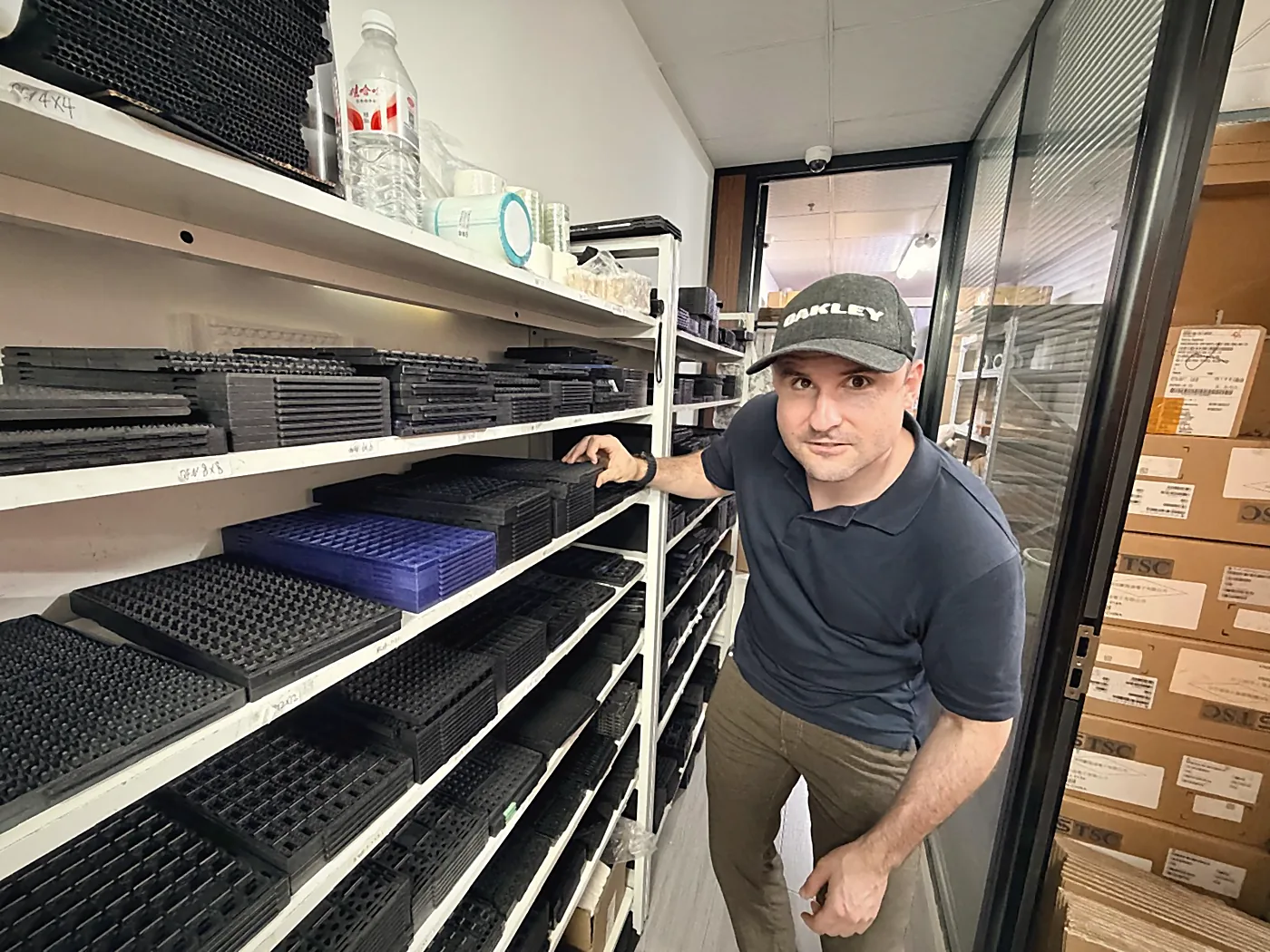
Sebastian Kirsch at the rack of component trays in the warehouse of a Chinese supplier
Sebastian Kirsch in the component warehouse of a Chinese supplier

07 / The next step

How do I start?

The first call is free.

Thirty minutes. Your situation, your product, your suppliers. At the end you have the potential check: how many alternative suppliers are worth considering and what saving is realistically on the table.

Sebastian Kirsch, your contact in the intro call
The person you speak to: Sebastian Kirsch, founder of Meritong

08 / Questions

What gets asked before an engagement?

Common questions about the BOM audit

The cost check on the critical items runs from €2,000 to €5,000, the full assessment of the complete bill of materials from €5,000 to €8,000, and a follow-on implementation project starts at €10,000. The figure is a fixed price in the engagement brief, alongside the number of items and the delivery date; the potential check that precedes it is free of charge. What can come back is shown by the scanner swap: procurement cost on the most expensive component down by 25 per cent, and around €20,000 of software spend avoided.

By putting a figure on every line item instead of negotiating the total: where the component actually comes from, how many second sources exist, what buying direct costs and what the switch would take in engineering effort. In the scanner case the most expensive component turned out to be a relabelled OEM module from Guangzhou, bought through two intermediaries at €33.61; at volume pricing direct from the manufacturer it was around €25. The saving did not come from a negotiation but from someone tracing the chain back to the factory and asking the manufacturer directly, in this case in Mandarin.

In the format you already keep it in. An Excel sheet, an ERP export or a PDF is enough; I convert the list into my format, not the other way round. If your bill of materials has gaps because individual items are only carried as an ODM assembly, that is not a reason to stop — it is usually a finding in itself.

Thirty minutes of conversation in which you name the type of component, for example camera sensor, optics or focus drive. Back you get an order of magnitude: how many alternative suppliers are worth considering and what saving is realistically on the table. The check works without confidential data. An NDA can be signed for it on request.

Every item is assessed across four dimensions, weighted at 40 per cent switching cost, 30 per cent single-source risk, 20 per cent supplier concentration and 10 per cent regulation. That produces the severity score, the score produces the ranking and the ranking produces the report. So every line carries a figure rather than a traffic-light colour, and the origin of that figure can be traced.

In the full assessment and in the implementation project the firmware deep dive is included (it does not apply to pure hardware); in the cost check it is not. I look at the codebase for vendor-specific integrations, proprietary protocols and architectural decisions that prevent substitution, including embedded models and inference runtimes. The result is a prioritised refactoring map with an hour estimate for each replacement. If your product is pure hardware, this step is dropped.

No. Most engagements run remotely on the basis of documentation and photographs. On request or where needed, I am happy to visit you on site at your premises. An on-site review of the supplier is also available as the option “On site in Asia”, for example if you want to meet a supplier or see the factory.

Yes, where the analysis uncovers a concrete supplier problem that can be resolved directly. I speak to your suppliers in their language and, where necessary, on site at their premises, about price leverage, technical clarification or the qualification of an alternative. As a step of its own that is the option “Supplier negotiation”; the purely technical clarification with a manufacturer’s engineers is also available separately from the audit.

Then the substitution map is the part of the report that counts: qualified alternative suppliers and components with the technical effort a switch requires, plus the status of each candidate. In the ongoing FPGA engagement the part from a US manufacturer is not available at any authorised distributor; the substitution map shows there what a redesign onto a Chinese FPGA costs (around six months of development time) and what buying on the broker market demands in verification effort.

You can implement it on your own, which is what it is written for: a figure for each item, named candidates, named switching effort. If implementation pays off and you lack the capacity, the implementation project is the next step, with a substitution roadmap, qualification of the alternatives and support through to introduction. The aim is approved second sources, where technically and economically feasible, not a recommendation.

On request, ongoing support: quarterly reassessment, monitoring of end-of-life notices and ongoing contact with your suppliers. A bill of materials ages, because prices, lead times and availability change; the report is therefore a snapshot with a shelf life. I discuss the terms at the report handover, not before.

The cost check fits when the bill of materials is small, the budget limited or time is pressing on a single component; it reviews the critical items and answers whether the full assessment is worthwhile. The full assessment takes every item fitted and is the normal case; it includes the firmware deep dive and the round in front of management, purchasing and engineering. The implementation project comes after that, when implementation pays off. We discuss which package fits your case in the free intro call.