 AI
AI
Start-ups and scale-ups
So that unit costs do not derail your next round.Ahead of the funding round or in the middle of technical due diligence: unit costs have to stand up to scrutiny before anyone asks.
For manufacturers of hardware products
Your product contains electronics, and you want to know where you can cut costs or where you depend on suppliers? I review your hardware including its firmware. You find out where other suppliers could save you money, where critical dependencies exist and whether your components are sufficient for the planned AI application.
Your bill of materials contains items that cost more than they need to, or that make you dependent on suppliers.
You receive an analysis against the criteria you choose, such as saving potential, supplier dependency or AI suitability.
For the items reviewed you see where you are paying too much, how much you can save and where you depend on suppliers.
02 / Your contact
Why Meritong and no other provider?
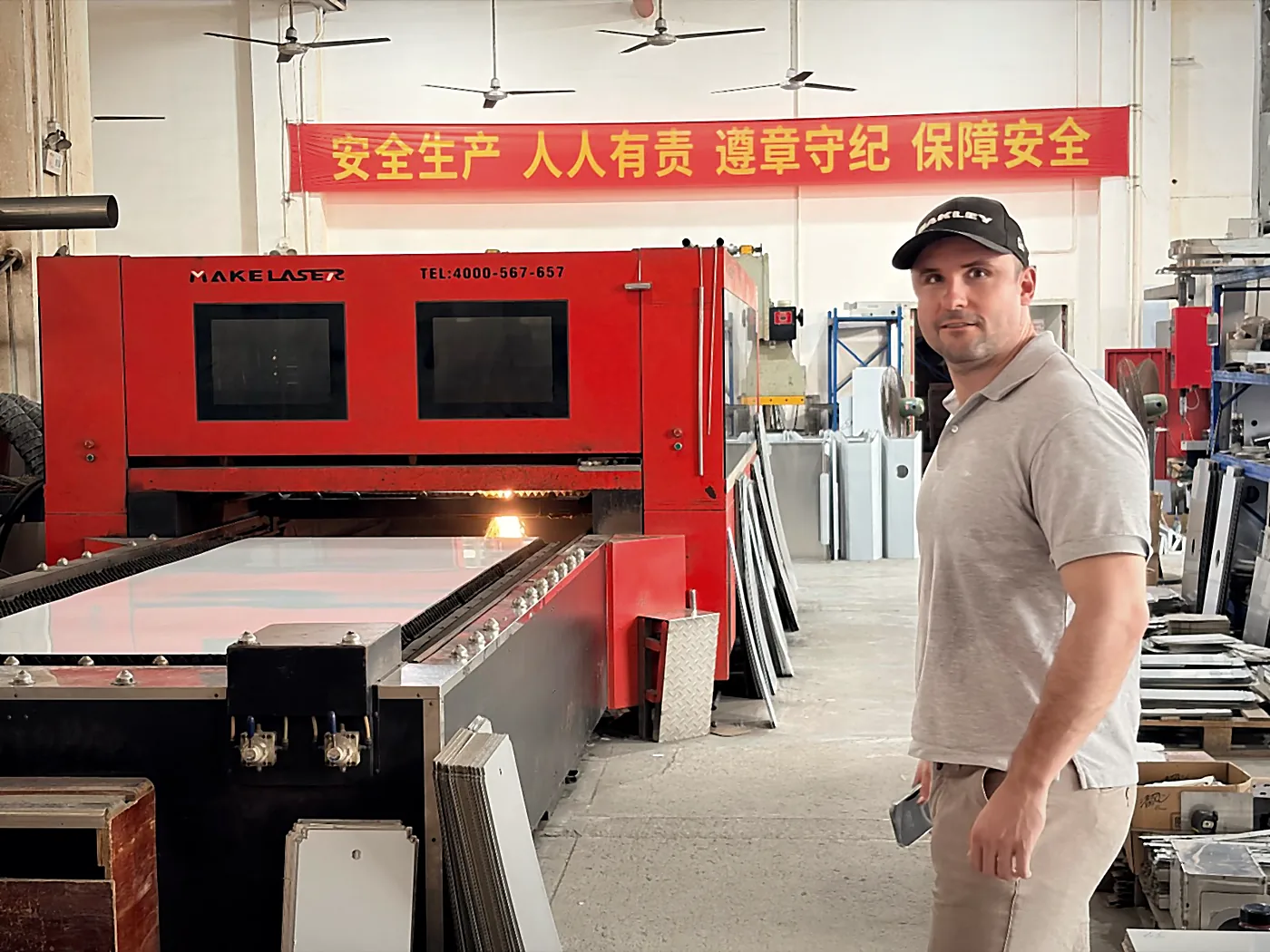
From prototype to series. I review every component for cost, dependencies and AI suitability.
Software and firmware are a decisive factor today. That is why I review them from the full assessment upwards, provided your product contains software or firmware.
I speak fluent Mandarin and read original Chinese documentation. I hold the conversations with your suppliers in Mandarin and, where needed, in English, German or Spanish.
Want to run AI on your hardware? I assess on technical grounds whether a component supports the planned AI application.
03 / Testimonials
Who has already worked with Sebastian Kirsch?
When critical components could no longer be sourced through the usual channels, Sebastian opened up alternatives for us on the Asian market: fast, structured and on site. He not only found suppliers, he also checked them for integrity and the goods for authenticity. In the end we had a clear and dependable basis for our decision.
Sebastian conducted a scalability audit of our systems and supply chain and helped us define a development and procurement roadmap aligned with our financial constraints. He identified a better-fit hardware component and supplier in China, projected to save tens of thousands of euros at scale, and supported the efficient integration into our software stack.
Sebastian combines deep technical understanding with strong system-level thinking across software, hardware, and global supply chains. He consistently demonstrated excellent analytical skills and the ability to communicate complex topics clearly across engineering and executive teams.
Sebastian led the implementation of a cloud-based platform with integrated edge devices for our municipality. He coordinated across software, hardware, and stakeholder groups and successfully delivered a system that operates reliably at scale. His ability to translate complex technical requirements into practical solutions was particularly valuable.
04 / The problem
Do any of these situations sound familiar?
A BOM audit pays off above all when even small savings on components noticeably improve your margin, or when you depend on a single supplier and price increases are looming.
The lower the cost of the individual components, the higher the margin. Analysing the bill of materials makes the decisive saving potential visible.
The EOL notice has arrived, or the lead time stands at 52 weeks and the spot market is asking four times the price. The choice between a last-time buy and a redesign is being made today without a defensible figure.
There is no qualified second source, or nobody has ever looked for one. Your supplier suspects as much, and every quarter you pay the premium.
The instruction is to bring material costs down. Where exactly those savings are meant to come from, nobody currently knows, and the bill of materials runs to hundreds of items.
Investors and buyers want certainty and demand an auditable report on cost and dependencies.
The alternative component costs half as much. Then it turns out the driver is tailored to the manufacturer's SDK, and the component swap turns into a software project.
If one of these situations is acute right now, it is high time. If it is only beginning to appear, this is exactly the right moment, because then you decide without pressure.
05 / Who it is for
Which companies is this made for?
The reason for an audit differs from company to company. The audit itself stays the same.
AI
Ahead of the funding round or in the middle of technical due diligence: unit costs have to stand up to scrutiny before anyone asks.
 AI
AI
Between prototype and series ramp-up. The jump from 50 to several hundred units exposes dependencies that nobody saw in the prototype.
 AI
AI
Owner-managed electronics and machinery firms sourcing in China and Asia that want to cut costs or reduce dependencies.
06 / The solution
How does the analysis actually run?
I review your bill of materials item by item, analyse the software and summarise the result in one report. You see at a glance where you can save, where dependencies exist and, if you wish, whether your components are sufficient for AI applications.
Components classified by single-source risk, regulatory risk and substitution complexity.
I take your bill of materials in whatever format you keep it: Excel, ERP export, PDF. Every component is assessed for switching cost, regulatory exposure (RoHS, REACH, the EU Batteries Regulation, US export controls) and supplier concentration. Components with hidden dependencies, among them AI accelerators, NPUs and inference modules, are flagged for deeper analysis.
Where your code ties you to a supplier without the bill of materials showing it.
If your product runs firmware or software that depends on a supplier's SDKs, protocols or tools, I review the codebase for vendor-specific integrations, proprietary protocols and architectural decisions that prevent substitution. That includes embedded ML models, vendor-specific inference runtimes and AI interfaces that quietly tie your product to one vendor. The result is a prioritised refactoring map with an hour estimate for each replacement.
Remote analysis or on-site inspection of the device.
I examine the physical architecture for fragility that a bill of materials does not show. Tolerances, integration decisions, manufacturing decisions that tie you to a specific manufacturer. Most engagements run remotely on the basis of documentation and photographs. On request or where needed, I am happy to visit you on site at your premises. An on-site review of the supplier is also available as an option.
Direct conversation with your suppliers, on site where necessary.
Where the analysis uncovers a concrete supplier problem that can be resolved directly, I speak to your suppliers in their language and, where necessary, on site at their premises. The focus is on price leverage, technical clarification and qualifying an alternative. This step is the option “Supplier negotiation”. It applies only where the analysis reveals a starting point for it and you want it.
What a change costs in engineering hours and budget
Whether a qualified second source exists and what it costs
RoHS, REACH, the EU Batteries Regulation, export controls
How much of the list hangs on a single supplier
In viewStep 01 evidences concentration and regulation
The four steps produce the evidence, the four dimensions score it. There is no one-to-one mapping: steps 02 and 03 both feed switching cost. The dimensions produce the severity score, the score produces the ranking, the ranking produces the report.
07 / Process and outcome
How does the audit run, and what do I hold in my hands at the end?
We settle scope and mandate: your situation, your product, your suppliers. You name the type of component; that is enough for the free potential check and needs no NDA. If the audit is not a fit, I will tell you so, and the assessment is yours to keep regardless.
Fixed scope, fixed price, fixed schedule, a clearly defined deliverable. The NDA is signed before any confidential document changes hands. Standard terms; my engagement brief runs to two pages.
This is where we go into detail: bill of materials, production status, known bottlenecks, history with the suppliers, open development strands. The audit plan comes out of this conversation, and afterwards you know which items I touch first.
You send the bill of materials and any existing supplier documentation, and optionally give me read access to the codebase. I carry out the analysis within the agreed period, with weekly progress notes.
You receive the written report and a sixty-minute walkthrough with your team. In Packages 2 and 3 I also present the findings to management, purchasing and engineering together.
Every report follows the same structure: the dependency table with a severity rating for each item, the cost estimate per replacement in engineering hours and budget, and the substitution map with qualified alternatives.
| Item | Severity | Replacement cost |
|---|---|---|
| MCU · STM32H7xxPeripheral mapping hard-wired in firmware | HIGH (88) | €12–18k |
| PMIC · proprietaryNo second supplier, ODM-specific | HIGH (81) | €8–14k |
| Inference runtime · SDKModel format tied to the vendor | HIGH (76) | €20–35k |
| Sensors · single sourceCalibration data only at the manufacturer | MEDIUM (57) | €4–7k |
| Connector layout · ODMMechanics aligned to the housing | LOW (24) | €2–4k |
| Items with | before | after |
|---|---|---|
| a single supplier | 3 | 0 |
| exactly two suppliers | 5 | 2 |
| three or more suppliers | 3 | 9 |
08 / Case studies
What has an audit actually produced?
 AI
AI
landed cost of the assembly
of software cost avoided
candidates assessed
€33.61 through the distributor → ~€25.00 direct from the manufacturer
The analysis found a direct OEM purchase of the same assembly at a markedly lower landed cost. The code review additionally showed that a large part of the control software could be deleted rather than ported.
The decisive clue was in a single paragraph on page 14 of the manufacturer's manual, in dense technical English.
Read the full case study →
available
under review: broker market or redesign
of redesign for the potential switch
A German electronics company needs an FPGA from a US manufacturer for a product launch in the spring. Authorised distributors have no stock that can be delivered in time for the launch. That leaves the open broker market in Asia. And it is exactly there that these components are frequently counterfeited or offered as reconditioned used parts.
I review the alternatives so that purchasing and engineering can reach a decision they both support.
Free intro call09 / The offer
What does a BOM audit cost?
Not sure whether the BOM audit is the right thing for you? Let us start with a free intro call. On request I can give you a first assessment on the basis of general information. After that we can discuss together which scope makes sense for your project and how I can best support you.
You name the type of component, for example camera sensor, optics or focus drive, and get an order of magnitude back: how many alternative suppliers are worth considering and what saving is realistically on the table. An NDA can be signed on request. The potential check can, however, also be carried out without any confidential information.
For small bills of materials, limited budgets, or a single component where time is pressing.
For any company with its own bill of materials. In one engagement the savings identified came to 3.8 times the fee.
For clients after Package 2 for whom implementation pays off.
Supplier meetings and factory visits in China, Vietnam, Thailand and other countries, when you want to meet a supplier in person or see the factory from the inside.
I build the relationship with the manufacturer directly and negotiate in the local language on prices, delivery and payment terms, quality requirements and everything else that secures your procurement.
Quarterly reassessment, monitoring of end-of-life notices, ongoing contact with your suppliers, support with integration and advice on a resilient software and firmware architecture. Terms are discussed when the report is handed over.
You have found an alternative, for example from a Chinese manufacturer, but cannot reach its engineers because the documentation is only available in Chinese or your follow-up questions fail on language? I handle the technical clarification directly with the manufacturer, in their language, and in Mandarin with Chinese manufacturers.
10 / Fit
Does the audit fit my situation?
11 / The context
How large is the leverage really?
Chinese manufacturing offers real advantages in cost and speed, but it also brings IP risks, geopolitical uncertainty, regulatory complexity (EU CRA, the Radio Equipment Directive) and deep supplier dependency. The right answer is rarely a complete yes or no. It is about deciding in a structured way what belongs in China and what does not, and about building the system so that this answer can change.
I bring something that most consultants simply do not have: direct communication in Mandarin with Chinese engineering teams, access to the complete Chinese-language technical documentation (not only the translated short version) and the ability to run supplier relationships directly, without intermediaries. At the same time I weigh the commercial, regulatory and geopolitical trade-offs with the same care. Sometimes China is part of the solution, sometimes it is not: where a Chinese supplier becomes a risk, I say so openly and help you diversify to suppliers in other countries.
of the world's cellular IoT modules come from China. Where a market is this concentrated, the supplier sets the price.
more technical content is often found in the original Chinese documentation than in the English version. What you cannot read, you cannot compare.
the fee. That is what the savings identified were worth in one engagement.
items and 33 suppliers of a camera bill of materials under live assessment.
lines of driver code reviewed, around 80 per cent of them deletable rather than portable.
of redesign when an FPGA from a US manufacturer is not available from any authorised distributor and a switch to a Chinese device is being assessed.
12 / Who does this
Who am I working with?
A computer science degree with a focus on machine learning, and alongside it Chinese up to negotiation level. Then years as a freelance software developer, during which he led Chinese software teams and spent six months working in China. Then the move into hardware: heading software development and later the entire engineering department, then managing director of a deep-tech start-up.
Working languages
13 / Working together
How safe are my bill of materials and my code?
A mutual NDA is signed before any data is handed over. The free potential check does not require one, because you only name the type of component. On request, we sign one for it as well.
Fixed scope, fixed price, fixed schedule, a clearly defined deliverable. If the scope changes, we adjust the brief beforehand rather than the invoice afterwards. You pay 50 per cent on signature and 50 per cent on handover.
Your bill of materials, your code and your supplier information remain confidential. I delete any data that could identify your company once the work is complete. Read access to the code is enough.
Weekly progress notes within the agreed period. Gaps within the agreed scope I close.
14 / The next step
How do I start?
Thirty minutes. Your situation, your product, your suppliers. At the end you have the potential check: how many alternative suppliers are worth considering and what saving is realistically on the table.

15 / FAQ
Your team knows your product better than I do. What it rarely sees from the inside are the decisions taken years ago that are now treated as given. The audit brings an outside view with a fixed method and delivers a figure for each dependency that your team does not produce, because there is neither the time nor the occasion for it.
A considerable share of Chinese component documentation is only available in Chinese and is in fact released on request, provided the request is made in the right language and with the right technical precision. On top of that come second-supplier data sheets, approval documents and the physical analysis of the device.
No. For the potential check you only name the type of component, for example camera sensor, optics or focus drive. No confidential data is needed for it, but an NDA can be signed on request. The complete bill of materials only comes into play once an NDA has been signed.
You get a first assessment from the free potential check: you name the type of component, I name the order of magnitude. An audit takes one to four weeks, depending on scope. The exact delivery date is set in the engagement brief and depends on the number of items.
The engagement brief names the number of items, the steps your audit runs through, the delivery date and the deliverable. If the scope changes, we adjust the brief beforehand rather than the invoice afterwards.
No. I do more than introduce suppliers: I analyse your bill of materials and show where cost savings are possible and where dependencies create risk. On request I identify suitable suppliers, organise the first contact and support the contract negotiations. I work exclusively in your interest and only with information you have released. I do not accept commission from suppliers.
That is the core of my work at Meritong. In the BOM audit I assess every item for what switching supplier would actually cost, in euros and in engineering hours. The cause rarely lies in procurement: if the firmware is written straight against a vendor-specific SDK, swapping a component becomes a software project rather than a purchase order. Why that is an architecture question and not a sourcing one is set out in Supplier Lock-In Is an Architecture Problem.
That is what I do at Meritong with the BOM audit. Every item reviewed gets a figure: the saving within reach, the second sources available and the effort a switch would take. The result is a ranked list with numbers rather than a recommendation. The entry point is the free potential check, for which you do not have to hand over your bill of materials. Method, report contents and prices are set out under Solutions.
For electronic components from China, what matters most is the documentation, the test process before delivery, certification and import duties. Whether a component should come from China is always an architecture decision as well: the cost and speed advantages have to be weighed against IP risks, geopolitical uncertainty and regulatory requirements. My recommendation is not fixed in advance: sometimes a Chinese supplier is the best choice, sometimes one in another country. The topic can only be touched on here. In the free intro call I am happy to look at your specific case.